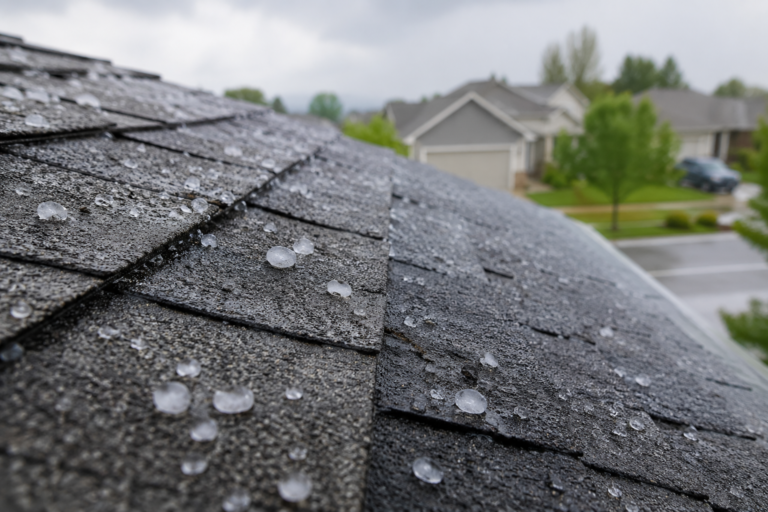
Hail damage can be catastrophic, and homeowners should know more than anyone else in the nation, perhaps. That sneaky hail can come in and start pounding your roof at a moment’s notice. After a storm, a roof could even look fine, but underneath the shingles, the infrastructure holding everything together is at a tipping point. This guide takes you through what you need know ned to know about hail damage, including what to look for after a storm and when to ask for help.
Why hail damage matters
Roofs take a beating year after year. Hail, high winds, intense sun, heavy snow, and constant freezing and thawing all wear down roofing materials in different ways.
Hail is one of the biggest concerns. Even if you don’t notice a leak right away, the damage can already be there. Hail can knock granules off asphalt shingles, crack concrete or clay tiles, dent metal components, damage flashing, and weaken the protective layer that keeps moisture out.
Once the protective covering is broken down, it causes the roof to deteriorate much faster and be more susceptible to future storm damage. A fast inspection after a hail event can help homeowners find and document any hail-related issues so they can better understand what occurred and possibly discuss potential repair or insurance-related roofing projects.
Why hail size matters
Damage from hail depends on many factors. Size is important, but it is not the only determining factor when it comes to the damage hail might inflict on a roof or home. Factors such as wind speed, hail density, roof age, roofing material, roof slope, and impact angle also affect how much damage a storm does. Generally speaking, larger hail carries more force. Quarter-size hail is considered pretty severe, and larger hail can damage shingles, tiles, vents, gutters, flashing, skylights, siding, and outdoor equipment.
Common hail sizes and approximate diameter
| Hail description | Approximate diameter | Why it matters |
|---|---|---|
| Pea | 0.25 inches | Usually minor, but wind-driven hail can still affect exposed materials. |
| Marble | 0.50 inches | Can mark soft metals, screens, and older exterior materials. |
| Penny | 0.75 inches | May damage older shingles, vents, gutters, and brittle roofing materials. |
| Quarter | 1.00 inch | Often large enough to justify a closer roof inspection. |
| Golf ball | 1.75 inches | Can cause visible roof, gutter, vent, and siding damage. |
| Baseball | 2.75 inches | Can cause major damage to roofing materials and exterior surfaces. |
Chart note: Hail size is only one part of roof-damage risk. A smaller hailstone with high wind can still cause damage, especially on older or already weakened roofing materials.
What does hail damage look like on a roof?
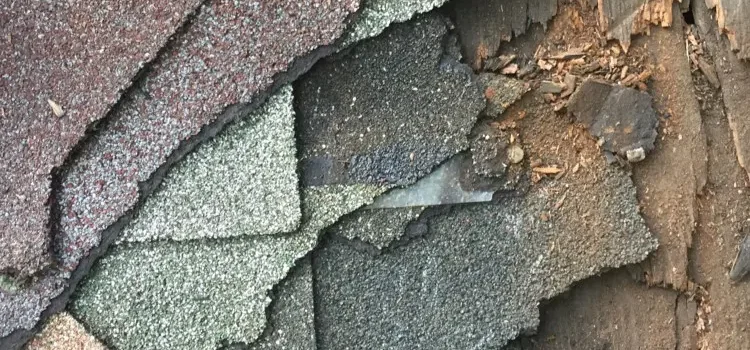
Hail Damage can show up differently depending on what type of roofing you have. Asphalt shingle roofs typically show signs like dark spots, loss of granules, bruising, or showing the backing mat. Tile roofs may show damage through cracked, chipped, or damaged corners, or dislodged tiles. Metal roofs often display dented or coating-damaged roof areas.
Some damage is easy to see. Other damage requires a trained roofer to identify because it may not be visible from the ground.
Roof damage by material type
| Roof material | Common hail damage signs | Why inspection matters |
|---|---|---|
| Asphalt shingles | Granule loss, bruising, exposed mat, soft impact spots | Damage may shorten roof life even before leaks appear. |
| Tile roofing | Cracks, chips, broken corners, displaced tiles | Small cracks can let water reach the underlayment. |
| Metal roofing | Dents, coating damage, damaged seams, damaged flashing | Some damage is cosmetic, but seams and penetrations need review. |
| Flat or low-slope roofing | Punctures, membrane bruising, surface damage, ponding near impact areas | Hidden membrane damage can lead to slow leaks. |
Common signs of hail damage around your home
Homeowners don’t need to climb on their roofs after a storm like Indiana Jones. Below are some signs that your roof or home might be damaged as a result of hail.
Ground-level hail damage clues
- ✓ Dents in gutters, downspouts, vents, or metal roof accessories.
- ✓ Granules collecting near downspouts or at the bottom of gutters.
- ✓ Cracked, chipped, or broken roofing pieces visible from the ground.
- ✓ Damage to window screens, siding, paint, outdoor furniture, or fencing.
- ✓ Water stains on ceilings or upper walls after the storm.
- ✓ Loose shingles, missing shingles, or uneven roof sections.
- ✓ Debris on the roof, in valleys, or near roof penetrations.
Why hail damage can be hard to spot
Hail damage can be subtle. Asphalt shingles do not necessarily break open immediately. They may have had their protective granule knocked off by the force of hail, or they may have been damaged in such a way as to weaken the area. This weakened area will then be aged by the elements of Colorado’s weather (sun, rain, snow & freeze/thaw).
The same is true for tile roofs. Even if you cannot see a leak from the outside due to a small crack, eventually water will make its way through the crack to the underlayment of your home.
Metal roofing may appear to have only cosmetic dents. However, hail can damage metal roofing seams, flashings, coatings, or roof penetration points.
Therefore, an inspection of your roof after a severe hail event is important. An inspection of your roof after a hail event provides information on whether there was functional damage, merely cosmetic damage, or no real damage at all to your roof.
What to do after a hailstorm
After the storm passes, take a calm and careful approach. The safest first step is to document what you can see without climbing onto the roof.
| Step | What to do | Why it helps |
|---|---|---|
| 1 | Check the property from the ground. | You can spot dents, debris, broken materials, and obvious damage safely. |
| 2 | Take photos of visible damage. | Photos help create a record of what happened after the storm. |
| 3 | Look inside for water stains or damp areas. | Interior signs may point to active water intrusion. |
| 4 | Schedule a professional roof inspection. | A roofer can check shingles, tiles, flashing, vents, and hidden problem areas. |
| 5 | Keep repair notes and inspection documentation. | Clear documentation helps homeowners make informed repair decisions. |
What not to do after hail damage
A hailstorm can cause you to feel rushed, like you need to do everything in your power to fix things. Take a deep breath and relax; rushing can cause mistakes you want to avoid.
Common mistakes after a hailstorm
| Mistake | Why it matters |
|---|---|
| Walking on the roof | Storm damage can make the roof unsafe, and foot traffic can cause more damage. |
| Ignoring small signs | Dents, granule loss, or chipped tile may point to larger roof damage. |
| Waiting for a leak | By the time water reaches the ceiling, damage may already involve decking, insulation, or drywall. |
| Making repairs without documentation | Photos and inspection notes help create a clear record of storm-related damage. |
| Assuming all dents are cosmetic | Some metal dents may be cosmetic, but flashing, seams, vents, and penetrations still need review. |
When should you schedule a roof inspection?
Scheduling a roof inspection after a hailstorm is recommended if the hail was at least the size of a quarter, if there were high winds during the storm, or if you notice that some areas of your property have been damaged. It may also be advisable to schedule a roof inspection as part of a follow-up to determine whether neighboring properties experienced similar damage from the same hail storm.
It is even more important to schedule a professional roof inspection on older roofs. The aging of shingle materials, erosion of tile material, deterioration of sealants, and weakening of flashing used in roofing systems can increase their susceptibility to hail impacts.
Inspection trigger: If hail damaged gutters, screens, siding, vents, outdoor furniture, or vehicles, it may have damaged the roof too.
How hail damage affects insurance-related roofing work
The first thing that comes to mind for many homeowners after a hailstorm revolves around insurance concerns. This makes sense and is completely understandable. The first step, however, should be understanding the condition of the roof. A clear roof inspection helps identify what damage is present and whether repairs or replacement may be needed.
Homeowners need to review their insurance policy to see if the damage sustained meets the requirements for filing a claim. They then need to document all visible damage and complete the claims process established by their insurance carrier. The insurance carrier will then make their own determination regarding coverage based upon their insurance policy and their review of the claim submitted by you.
Forest Roofs helps homeowners understand the roofing side of the process. That includes inspecting the roof, documenting visible storm damage, explaining repair options, and completing roofing work when the homeowner decides how to move forward.
Hail damage repair vs. roof replacement
storm does not have to cause a homeowner to replace their entire roof. While some hailstorms result in no major problems and a roof that simply needs to be repaired, other storms are so damaging that they require either a large repair effort for many areas of the home or an entirely new roof.
The right solution depends on the roof material, age, condition before the storm, number of damaged areas, and whether the damage affects the roof’s ability to shed water.
| Roof condition | Possible next step |
|---|---|
| Minor isolated damage | Targeted repair may be enough. |
| Damaged vents or flashing | Replace affected roof accessories and seal vulnerable areas. |
| Widespread shingle bruising or granule loss | A larger repair or replacement may be needed. |
| Cracked or broken tile across multiple roof areas | Professional evaluation is needed to check tile and underlayment. |
| Interior water damage after hail | Inspect the roof, attic, decking, insulation, and interior damage source. |
How to reduce future hail damage risk
No roofing material can stop every hail-related problem. But homeowners can reduce risk by keeping the roof maintained, fixing small problems early, and choosing durable roofing materials when it is time for replacement.
Impact-resistant shingles or other hail-resistant materials may be worth discussing in hail-prone parts of Colorado. Homeowners should also keep gutters clear, maintain flashing, trim overhanging branches, and schedule regular roof inspections.
Hail-readiness checklist
- ✓ Schedule regular roof inspections.
- ✓ Repair loose shingles, cracked tiles, and damaged flashing.
- ✓ Keep gutters and downspouts clear.
- ✓ Trim branches that hang over the roof.
- ✓ Review roofing material options before replacement.
- ✓ Keep photos and records of roof repairs and inspections.
Why homeowners trust Forest Roofs after hailstorms
Forest Roofs understands how Colorado and the Rocky Mountain West’s hail affects residential and commercial roofing systems. Our team helps homeowners identify roof damage, understand repair options, and make informed decisions after storms.
We try to make every roof inspection as clear, honest, and helpful as possible. We’ll tell you if all your roof really needs is a minor repair. However, if there’s an issue with your roof that needs serious attention, we’ll clearly explain what we’ve seen and give you information about your options.
Forest Roofs helps homeowners throughout Denver and surrounding Colorado and neighboring state communities with hail damage inspections, storm-damage assessments, roof repairs, insurance-related roofing work, and full roof replacements.
Schedule a hail damage inspection
If your home recently went through a hailstorm, Forest Roofs can inspect your roof, document visible damage, and explain your repair or replacement options clearly.Contact Forest Roofs today to request your free inspection and estimate.
FAQ
Can hail damage a roof without causing a leak?
Yes, hail can damage a roof without causing leaks immediately. Hail may bruise shingles, loosen granules on shingles, crack tile or dent accessories and flashing before water enters your home.
How soon should I inspect my roof after a hailstorm?
You should check from the ground as soon as it is safe to do so. You should schedule a professional inspection if large hail was present in the storm, strong wind occurred with the hailstorm, or you see damage to your gutters, vents, siding, screens, vehicles, outdoor surfaces, etc.
Is it safe to check hail damage by walking on the roof?
No, definitely avoid walking on the roof at all; it’s not safe.